
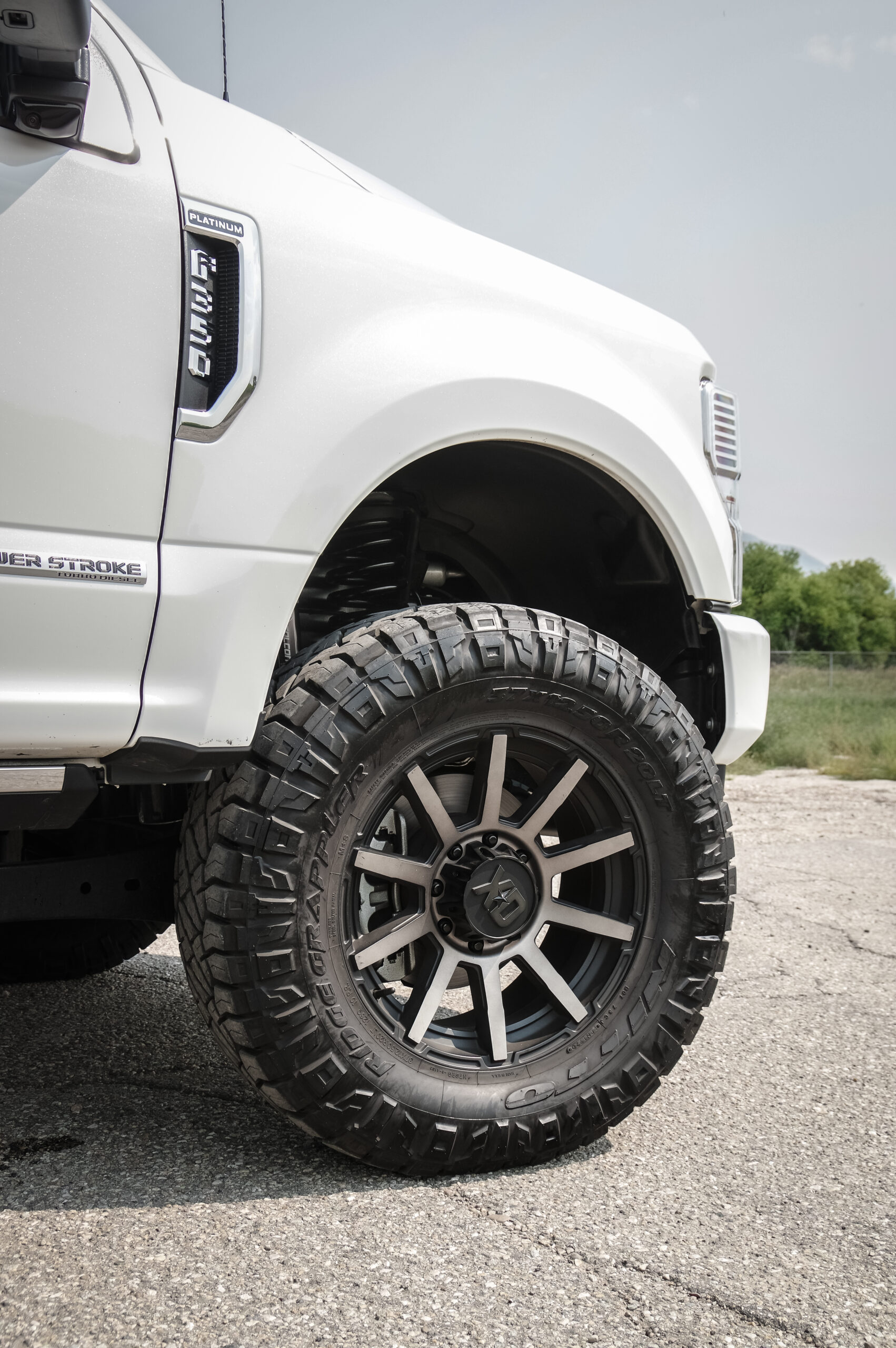
Leveling kit vs lift kit — what’s the difference, and which one is right for your truck? If you have spent any time looking into suspension upgrades, you have probably run into both terms — leveling kit and lift kit — and wondered if they are basically the same thing. They are not. One is a targeted correction, and the other is a full overhaul. Understanding the difference will save you money, prevent the wrong call, and make sure your truck ends up exactly where you want it.
Here is what each one actually does, and how to decide which is right for your situation.
Why Your Truck Has a Rake in the First Place
Most trucks roll off the assembly line with the nose sitting one to two inches lower than the rear. This is intentional. Engineers build in that forward slope to compensate for the front rising when you load the bed or hitch up a trailer under a heavy load. When you are not towing, that rake makes your truck look slightly nose-down and limits your tire clearance up front. It is not a flaw — it is a design choice. But a lot of truck owners want to correct it.
What a Leveling Kit Does
A leveling kit raises the front of your truck only, bringing it up to match the height of the rear. That is it. Most kits use spacers that mount over the factory struts or at the upper control arm, adding one and a half to two and a half inches of front lift without touching the rear suspension at all.
The result is a clean, balanced stance — no more nose-down look — with room to fit slightly larger tires up front. Leveling kits are straightforward to install, generally take a couple of hours, and the total cost including a post-install alignment is typically in the $300 to $600 range depending on your truck and the kit. ReadyLIFT is one of the most trusted names in leveling kits, and it is one of the brands we use and recommend here at the shop.
A leveling kit makes the most sense if you are a daily driver who wants a cleaner, more aggressive stance without dramatically changing how your truck rides. It also works well if you are running a heavy steel front bumper — the extra weight up front can actually take advantage of the added height and keep your truck from sagging.
What a Lift Kit Does
A lift kit raises the entire truck — front and rear — by replacing or upgrading suspension components like springs, shocks, struts, and often control arms. The goal is significantly more ground clearance, the ability to run much larger tires, and serious off-road capability.
A four-inch lift typically opens the door to 35-inch tires. A six-inch lift can get you to 37s or larger on most full-size trucks. That kind of clearance changes what your truck can do on a trail, in mud, or over rough terrain. Lift kits also transform the look of a truck in a way a leveling kit cannot — there is a noticeable difference in presence when a truck is sitting on a quality lift.
The tradeoffs are real. Parts alone for a quality lift kit run from around $500 on the low end to $2,000 or more for premium setups. Installation adds to that, and you will likely want new wheels and tires to fill the fenders properly. Total project cost for a full lift build can run well past $5,000. Your daily ride quality will also change — a lifted truck on pavement rides differently than stock, though good brands minimize this significantly.
How to Choose: Leveling Kit vs Lift Kit
Here is an honest breakdown based on how we talk through it with customers at the shop every week:
If you are mostly on pavement with occasional dirt roads and you want a clean, level stance with room for slightly larger tires, a leveling kit is the right move. It is the most affordable way to meaningfully change the look of your truck without altering your ride quality or towing capability.
If you are running big tires, going off-road regularly, or building a truck that needs to handle rough terrain, a lift kit is worth the investment. It is not a budget decision — it is a capability decision. If your truck needs to do the work, do not undersell it with a leveling kit.
If you are somewhere in the middle — you want more height than a level but do not need a full six-inch build — there are mid-lift options in the two to three inch range that split the difference nicely. ReadyLIFT makes a strong lineup in this category as well.
One Thing You Cannot Skip
Regardless of which direction you go, you need a professional alignment after the install. This is not optional. Any change to your suspension geometry affects how your tires contact the road, and running without a proper alignment after a suspension change will wear out your tires and affect handling. We do this as part of every install at the shop.
Come Talk It Through
If you are not sure which direction makes sense for your truck, come by the shop and we will ask you a few questions about how you use it and what your goals are. There is no pressure and no upsell — just the right answer for your situation.
Stop by Texas Truck Riggins at 2723 Boonville Rd in Bryan or give us a call at (979) 823-7219 to get a quote on a leveling kit or lift kit for your truck today.
